
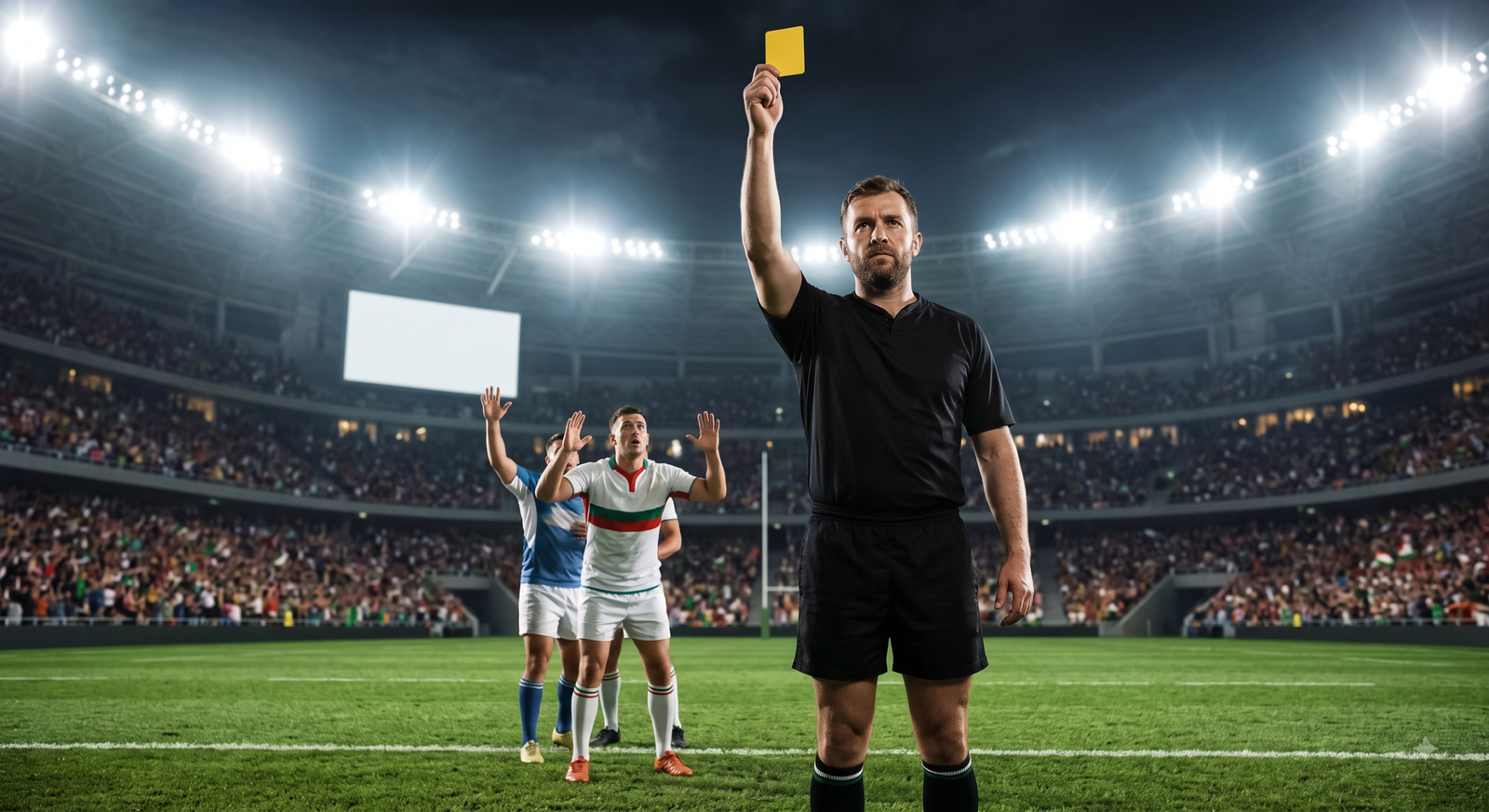
Are Rugby Referees Ruining the Game? The 7 Yellow Cards That Started a Debate
Rugby referees have never been more powerful, more scrutinised, or more controversial than they are in 2026. In July, England and Argentina played a Nations Championship test that produced seven yellow cards, reduced both teams to thirteen men simultaneously, and lasted so long that the match became more about officiating than rugby. In the same round, New Zealand and Italy played a test in which the referee was accused online of bias so blatant that match official Luc Ramos trended on social media in three countries. World Rugby has changed its red card rules twice in twelve months. Nobody agrees on what the laws actually mean any more. The question is no longer whether rugby referees are controversial. It is whether they are actively making the sport worse.
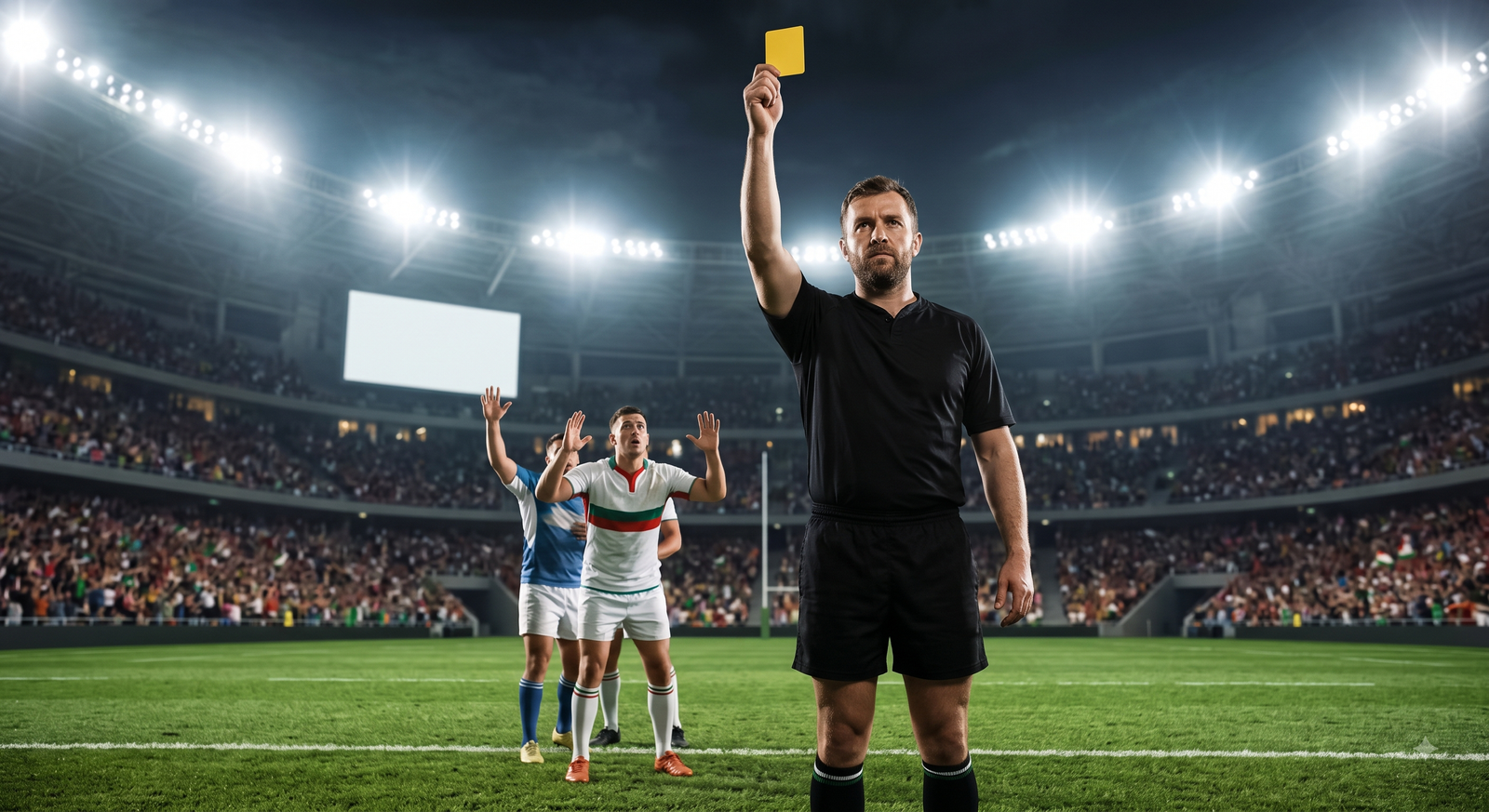
The 7 Yellow Cards: What Happened in England vs Argentina
On 18 July 2026 in Santiago del Estero, England and Argentina played a Nations Championship test that finished 31-24 to England. The scoreline is the least interesting thing about it. Referee Angus Gardner issued seven yellow cards across eighty minutes — four to Argentina, three to England. At one point in the second half, both teams were reduced to thirteen men simultaneously. Argentina captain Julián Montoya said afterwards: “It’s part of our values. We respect the decision. Of course I’m a bit frustrated but it is what it is.”
That is a measured response from a captain whose team had just played forty minutes of international rugby at numerical disadvantage. The frustration underneath it was evident. Los Pumas had led or been level for much of the match — England needed the yellow card advantage to establish control, and Argentina’s discipline under the sustained pressure of Angus Gardner’s officiating eventually cracked. Was the rugby poor? Sometimes. Were the cards warranted? Some of them. Were seven yellow cards in a single test match a sign that something is broken in how rugby referees apply the laws? Almost certainly yes. See our full match report at Los Pumas vs England 2026.
Rugby Referees and the Red Card Confusion
The yellow card epidemic of 2026 has not happened in a vacuum. World Rugby has changed its approach to red and yellow cards so frequently in the last two years that even experienced players and coaches are no longer sure what earns what. The 20-minute red card was introduced as a trial, debated endlessly, then partially walked back. Permanent red cards were redefined for the 2026 Six Nations — now reserved strictly for acts of thuggery, after high-profile sendings-off in the 2025 Autumn Nations Series left fans baffled about why an accidental head clash earned the same punishment as a deliberate elbow.
France and Ireland both issued statements of concern about the implementation. New Zealand and Australia campaigned for the 20-minute red card to become permanent law. The result is a patchwork of protocols that vary by competition, that referees apply inconsistently, and that nobody in the sport can explain clearly to a new fan. Rugby referees are not the problem. The laws they are being asked to enforce are.
The NZ vs Italy Controversy — When Fans Accuse Referees of Bias
In Round Two of the 2026 Nations Championship, Luc Ramos refereed New Zealand against Italy. His performance generated more online debate than the match itself. Fans accused him of inconsistency, of appearing flustered from the opening exchanges, and of handing New Zealand the benefit of the doubt on several marginal decisions — including a controversial Will Jordan try that TMO intervention failed to overturn convincingly. By the end of the match, “Ramos” was trending on rugby social media in the UK, South Africa and New Zealand simultaneously.
Rugby referees have always been criticised. What has changed in 2026 is the sophistication of that criticism. Fans can now watch multiple camera angles in real time on their phones, compare officiating decisions across matches within seconds, and access data on referee accuracy that did not exist five years ago. The gap between what fans can see and what referees officially acknowledge has never been wider. That gap generates the accusations. Whether those accusations are always fair is a different question — but the volume and coherence of them suggests that something in how rugby referees communicate their decisions needs to change.
The Deeper Problem: Laws That Referees Cannot Consistently Apply
The honest assessment of rugby referees in 2026 is that most of them are excellent athletes doing an extremely difficult job under impossible conditions. They are asked to monitor the breakdown — one of the most technically complex areas of any sport — while simultaneously tracking offside lines, managing player welfare protocols, consulting the TMO, and communicating live decisions to a global television audience. They make mistakes. Every referee in every sport makes mistakes.
The problem is not referee quality. The problem is that World Rugby has layered so many laws, trials, directives and protocols onto the game that consistent application has become structurally impossible. When seven yellow cards appear in one test match — as they did when England faced Argentina in July — the question is not whether Angus Gardner had a bad day. The question is whether a legal framework that permits seven yellow cards in eighty minutes of international rugby is one that serves the sport.
What Rugby Referees Actually Need
The solution is not to blame rugby referees. It is to simplify what they are being asked to do. Fewer law changes per cycle. Clearer definitions of what earns a yellow versus a red. A TMO protocol that speeds up decisions rather than extending them. And — critically — more transparency from World Rugby about referee training, grading and accountability. According to World Rugby, match officials are evaluated after every test match. Those evaluations are not public. Publishing them — at least in summary form — would give fans context for decisions they currently can only guess at.
Rugby referees are not ruining the game. But the laws they are enforcing, and the volume of changes they are asked to absorb each season, are making their job harder than it needs to be — and making the spectacle worse for everyone watching. The England-Argentina test of July 2026 is the clearest example of what happens when the system breaks down. Seven yellow cards. Thirteen men a side. A great match reduced to a disciplinary exercise. Argentina were part of it. So was England. So, ultimately, was World Rugby itself. For more on Argentina’s Nations Championship season, see our Argentina 2026 fixtures guide.
Read More — Rugby Books on Amazon UK
📖 The Good, the Bad & the Rugby — Unleashed — James Haskell and Dylan Hartley on referees, red cards and everything wrong (and right) about the modern game.
📖 Pumas: A History of Argentine Rugby — Los Pumas have had their share of controversial calls over the decades. The full story in English.
🍺 Craft beer hampers on Amazon UK — because watching rugby referees is a lot easier with a cold one in hand.