Argentina rugby players 2026 Los Pumas World Cup 2027 squad

Argentina Rugby Players 2026: The Eight Pumas Who Will Define the World Cup

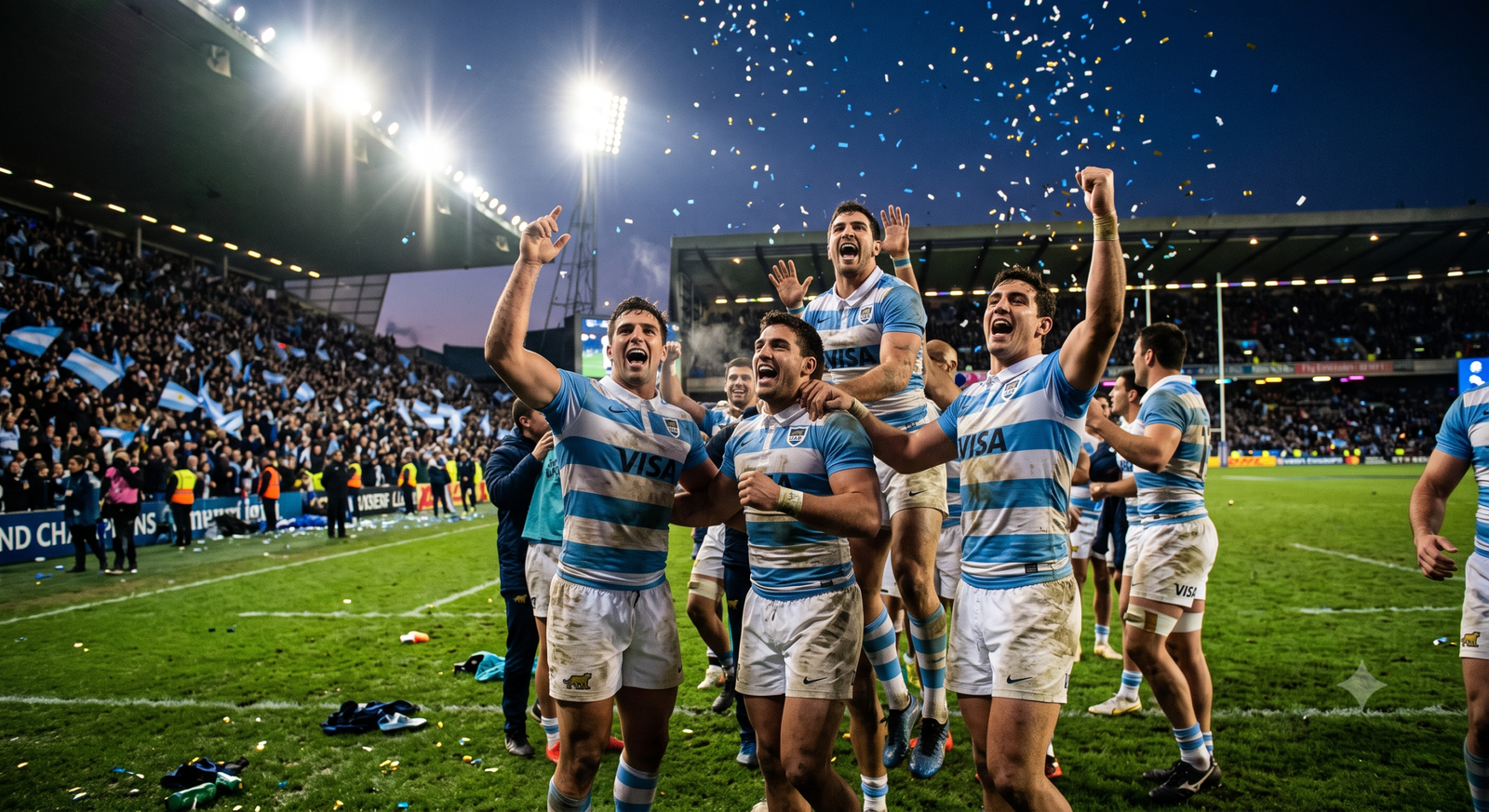
Argentina rugby players 2026 are carrying something bigger than a Nations Championship campaign. “We see ourselves capable,” said Justo Piccardo after the July window. “It’s seven matches where you have to be the best — and we’re going to try to do it.” He was talking about the Rugby World Cup 2027 in Australia. Every match this year, every selection decision, every player development choice Contepomi makes is preparation for that moment.

These argentina rugby players 2026 are the eight players who will define whether Argentina gets there.

Argentina Rugby Players 2026: The World Cup Generation

Justo Piccardo — The Winger With a Champion’s Mindset

Born 25 March 2002. Club: Montpellier. 24 years old.

Piccardo arrived at the 2026 Nations Championship as one of the most exciting young backs in Argentine rugby — and left it as one of the standout performers of the July window. The Montpellier winger was named Rookie of the Year in Super Rugby Americas in 2024, and his trajectory since has been relentless.

What makes him different is the mentality. “Todos lo vemos así. Nos vemos capaces” — we all see it the same way, we see ourselves as capable. A 24-year-old winger at Montpellier talking about winning a World Cup without hesitation. That belief, combined with the technical quality he has developed in France, makes him one of the most compelling Pumas to watch between now and Australia.

Tomás Albornoz — The Flyhalf Argentina Can’t Afford to Lose

Club: Toulon (from 2025-26). Position: Flyhalf.

Albornoz is the player Contepomi builds Argentina’s attacking game around — the decision-maker at 10 who provides the game management Los Pumas need when matches get tight. His move to Toulon from Benetton elevated him into the Top 14, the most physically demanding domestic league in the world.

The cloud over his 2026: a World Rugby misconduct charge following his confrontation with referee Angus Gardner at the end of the England match in July. He became the first player charged under World Rugby’s new Match Official Abuse Sanction Process. If that sanction costs him matches, Argentina lose the one player who most controls what they do. World Rugby

Santiago Chocobares — Four Titles and Still Underrated

Club: Stade Toulousain. Position: Centre.

The most decorated Argentine in French club rugby history. Four Top 14 titles at Toulouse. The full profile of his career is covered in our Santiago Chocobares Toulouse article, but the 2027 angle is this: at the age when most Argentine centres reach their peak, Chocobares is already battle-tested at the highest level of club rugby. He arrives at a World Cup as the most experienced Argentine back in European competition — and that experience is exactly what final knockout rounds demand.

Juan Cruz Mallía — The Attacking Fullback Who Changes Everything

Club: Stade Toulousain. Position: Fullback.

When Mallía plays, Argentina are a different team. His ability to enter the attacking line at pace, his finishing, his aerial quality — Toulouse use him as a strike weapon rather than a last line of defence. A hat-trick against Toulon earlier in the season was the clearest statement of his threat.

The problem: injury has kept him out of the 2026 Nations Championship entirely. His return timeline for August is uncertain. For 2027, Argentina need him fit and playing — a World Cup without Mallía at fullback is a weaker proposition.

Pablo Matera — The Captain Who Returned

Club: Bath Rugby. Position: Flanker/Number 8.

Matera was Montoya’s predecessor as captain and returns to the role for August after Montoya’s release to his club. What Bath have done for him is extend his career — his work rate, his defensive intensity, his ability to compete at the breakdown are all sharper for the English Premiership environment. He will be 32 at Rugby World Cup 2027, but Matera at 32 with Premiership conditioning is a different proposition from Matera at 32 without it.

Joaquín Oviedo — Argentina’s Standout Player of July

Club: Perpignan. Position: Flanker/Number 8.

Born 17 July 2001. The standout performer of the entire July window. Oviedo’s ruck work, his carrying game and his ability to shift the tempo of a match from the breakdown made him undroppable when fit. The fact that Perpignan insisted on a full preseason commitment — keeping him out of August — tells you how highly his club value him.

At 24, playing in the Top 14, and already the best Puma in a July window, Oviedo is one of the most exciting loose forwards in Argentine rugby history at this stage of a career. 2027 could be his tournament.

Juan Martín González — The Return Everyone Is Waiting For

Club: Saracens. Position: Number 8/Flanker.

González broke a metatarsal playing for Saracens and required surgery that ruled him out of the entire 2026 July window — and likely the August matches too. His return timeline was described as approximately six months. The player himself called it “a period to stop and start again.”

The reason his absence matters: González is one of the most complete loose forwards in the world when fit. His combination of carrying power, lineout work and defensive intensity at Saracens gave Contepomi an option at 8 that very few teams can match. His fitness for November — and for 2027 — is the most important injury story in Argentine rugby right now.

Julián Montoya — 120 Caps and Still the Heartbeat

Club: Pau (Section Paloise). Position: Hooker.

120 international caps. Former captain. The player who held Argentina’s lineout and set-piece together for a decade. Montoya’s move from Leicester Tigers to Pau in the 2025-26 season kept him in French rugby, in the Top 14 environment, competing at the highest level at hooker.

He was rested for August — club preseason obligations take precedence when Contepomi decides to manage the squad load. But for November, and for 2027, Montoya returns. A World Cup in Australia with 120 caps of experience behind him and Pau sharpening his set-piece week after week is exactly the preparation a hooker needs.

What 2027 Requires

Piccardo said it plainly. Seven matches. Every day thinking about how to become a world champion. This generation of Pumas — Oviedo, Albornoz, Piccardo, González — are young enough that 2027 is their moment. Montoya, Matera and Chocobares bring the experience to hold it together when the knockout rounds arrive.

The Nations Championship 2026 is the audition. Australia is the exam.

For the full Nations Championship fixture list and results, see our Argentina Nations Championship 2026 schedule.

Similar Posts

  • Santiago Chocobares Toulouse rugby career tells a simple story: an Argentine centre who arrived in southwest France and won four Top 14 titles. No Argentine in French club rugby has done more.

    Santiago Chocobares Toulouse rugby career reads like a fantasy signing that actually worked — an Argentine centre who arrived in southwest France and became a cornerstone of the most successful club in French rugby history. In Argentine rugby, the pathway to France has always existed but rarely produced players who stayed long enough to become true legends of a French club. Santiago Chocobares changed that. By winning four Top 14 titles with Stade Toulousain, he became the most decorated Argentine player in the history of French club rugby — and did it while remaining one of the most underappreciated figures in Los Pumas’ recent story. The Centre Position in Argentine Rugby To understand Chocobares, you need to understand what Argentine rugby demands of its centres. The UAR system produces centres who are physically robust, defensively reliable, and capable of functioning as an extra forward when the game demands it. There is less emphasis on the creative, offloading style that characterises French or New Zealand centres, and more on the ability to carry hard, defend aggressively in the line, and execute the simple plays correctly under pressure. Chocobares fits that profile perfectly — but he arrived at Toulouse and learned to add a French dimension to it. Playing alongside world-class backs at a club that prioritises attacking rugby, he developed an understanding of space and timing that made him more than just a defensive asset. He became a genuine two-way centre, which is why Toulouse kept him. Four Titles at the Pinnacle of French Rugby The Top 14 is arguably the most physically demanding domestic league in world rugby. The depth of quality at every position is extraordinary, the schedule is relentless, and the pressure from the club environment — passionate supporters, demanding presidents, intense media scrutiny — makes it a genuinely difficult place to sustain a long career. Santiago Chocobares Toulouse rugby record stands at four Top 14 titles. That places him in the company of the greatest players in the club’s modern history. Toulouse is not a club that carries passengers — every player who earns a starting position does so on merit, week after week, against the best centres in Europe. The fact that Chocobares remained a key figure across multiple title-winning cycles speaks to the quality and consistency he brought to the position. The Los Pumas Connection What makes Chocobares particularly interesting from an Argentine rugby perspective is that his success in France coincided with a period when the Pumas were increasingly looking for centres who could bring something different to the backline. Felipe Contepomi’s tenure as head coach has involved experimentation in midfield, and Chocobares’ experience at the top level of club rugby makes him a natural candidate to influence international selection conversations. His time at Toulouse also exposed him to a high-performance environment that few Argentine players experience — structured recovery, elite sports science support, detailed video analysis, and the constant exposure to players who set the standard in their positions globally. That environmental factor shapes a player in ways that are difficult to quantify but immediately visible in their game management and physical conditioning. Why He Matters Beyond the Statistics In English rugby media, Chocobares is barely mentioned. He plays in France, his club is Toulouse, and unless you follow the Top 14 closely, his name means nothing. But for anyone tracking the development of Argentine rugby talent across European leagues, the Santiago Chocobares Toulouse rugby story is significant. He is proof that Argentine players can thrive at the very top of French club rugby — not as mercenaries filling a foreign quota, but as players who contribute to long-term success at the highest level. Four titles. Four. At a club where titles are the only currency that matters. For Los Pumas supporters watching from the Southern Hemisphere, that track record deserves far more attention than it currently receives. Shop Argentina Rugby 📖 Pumas: A History of Argentine Rugby…

  • Marcos Ayerza Leicester Tigers is a story of quiet dominance — thirteen years, over 250 appearances, no Argentine has matched it since.

    When Leicester Tigers signed a young loosehead prop from Buenos Aires in 2005, nobody quite knew what they were getting. By the time Marcos Ayerza retired in 2018, he had become the most decorated and longest-serving Argentine in the history of the English Premiership — a player so embedded in the Tigers’ identity that many Leicester fans simply forgot he wasn’t English. According to World Rugby, Argentina remain one of the sport’s most compelling stories. From Buenos Aires to Welford Road Ayerza was born in 1983 in Buenos Aires and came through the Argentine club rugby system before catching the attention of European scouts. At the time, Argentine props were not yet the global commodity they are today. The Pumas were still building their reputation, and the pathway from Argentine club rugby to the English Premiership was narrow and unforgiving. He arrived at Leicester with strong fundamentals — the Argentine scrum school is arguably the best in the world at developing technically correct props — but needed time to adapt to the physicality and pace of the Premiership. That adaptation period was brief. Within two seasons, he was a first-choice starter. The Leicester Years What made Ayerza exceptional was not individual brilliance but reliability. In a position where a single technical flaw can cost a team three points, Ayerza scrummaged with consistency that Leicester could build a game plan around. His understanding of the laws, his body positioning, and his ability to function under pressure in tight-game situations made him invaluable to coaches Martin Johnson, Richard Cockerill, and Matt O’Connor across different eras of Tigers rugby. He won the Premiership title with Leicester and was part of the squad during one of the club’s most successful periods in the competition’s modern history. He made over 250 appearances in all competitions for the Tigers — a number that represents extraordinary longevity for a prop in professional rugby. Off the pitch, Ayerza was known as a professional’s professional. No controversy, no transfer sagas, no public disputes with management. He arrived, trained hard, played hard, and went home. In an era of increasingly transient professional rugby careers, thirteen years at a single club is a statement of loyalty that very few players of any nationality can match. The numbers tell the story: Marcos Ayerza Leicester Tigers career spanned thirteen seasons and over 250 appearances, a record no Argentine has come close to matching in English rugby. The Argentine Dimension Ayerza earned over 60 caps for Argentina, becoming a key part of the Los Pumas scrum during a period when their set piece was establishing itself as one of the most feared in international rugby. The combination of his Leicester experience — training and playing against the best English props week in, week out — and the Argentine technical scrum tradition made him a uniquely complete player at international level. He was part of the Argentina squad that famously finished third at the 2007 Rugby World Cup in France, a tournament that changed how the world viewed Argentine rugby. That generation — Mario Ledesma, Rodrigo Roncero, Ayerza — built a scrum platform that the backs could exploit, and Los Pumas used it to dismantle France in the bronze medal match in front of 80,000 people in Paris….

Leave a Reply

Your email address will not be published. Required fields are marked *