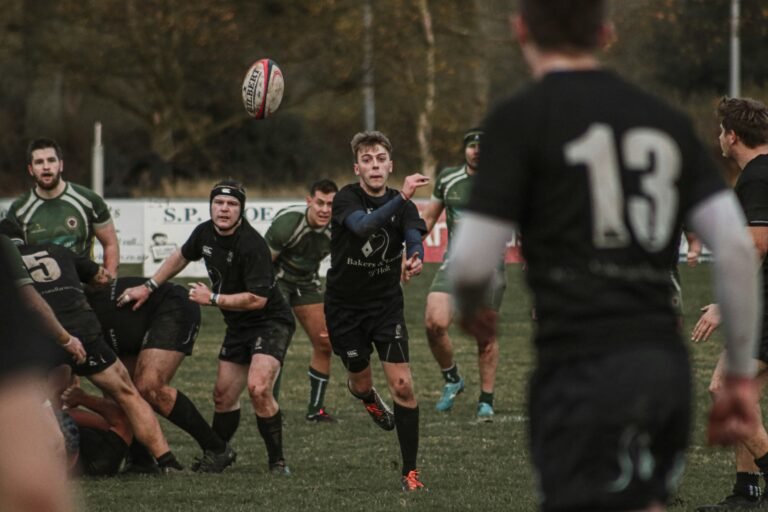
The Argentina rugby eligibility rule is unique in world rugby: if you were not born in Argentina, you cannot play for Los Pumas — no exceptions, no heritage selections, no residency shortcuts.

The Argentina rugby eligibility rule is simple, strict, and unique in world rugby: if you were not born in Argentina, you cannot play for Los Pumas — regardless of how long you have lived there, how Argentine your upbringing was, or how badly the team needs you.

Every other major rugby nation operates a system that allows heritage selections, long-term residency qualifications, and — in some cases — players who simply could not get into their original country’s squad and decided to represent somewhere else instead. Argentina does not. The UAR’s born-in-Argentina policy is the most restrictive eligibility standard in international rugby, and it generates debate every time it costs the Pumas a player or a rival nation benefits from a player with Argentine roots.

I have been following Argentine rugby for most of my life and played the game in Buenos Aires for thirteen years. My view on this rule is probably more nuanced than most: I think the UAR is right to hold the line, even when it hurts.

What the Rule Actually Says

The Argentina rugby eligibility rule requires Pumas players to have been born on Argentine soil. This goes beyond World Rugby’s eligibility regulations, which allow players to represent a nation through birth, parentage, grandparentage, or three consecutive years of residency. The UAR voluntarily applies a stricter standard internally — you can qualify for Argentina under World Rugby rules, but if you were not born in Argentina, the UAR will not select you.

This is a policy decision, not a legal requirement. The UAR chose this position deliberately.

The Case That Captures the Debate: Domingo Miotti

Last week, Domingo Miotti announced he would play for Italy. Miotti is an Argentine flyhalf who just played in the Top 14 final, is in the form of his career, and was reportedly contacted by Felipe Contepomi about joining the Pumas setup. He said no. He chose Italy.

The response in Argentine rugby circles was a mixture of frustration and resignation. Frustration because Miotti is exactly the type of player Los Pumas need — a modern, experienced flyhalf competing at the top level of European club rugby. Resignation because the situation is not new. Players who wait years for a call that never comes eventually make a decision based on where they can actually play international rugby. Italy called. Contepomi called too late, or not convincingly enough. Miotti chose certainty over waiting.

This case illustrates the tension at the heart of the Argentina rugby eligibility rule. The born-in-Argentina policy means the Pumas cannot select a player born in Italy to Argentine parents who grew up playing rugby in Buenos Aires. But it also means that if an Argentine-born player grows tired of waiting and declares for another nation, they are gone. The UAR holds a strict line on eligibility, but World Rugby’s regulations still allow players to switch allegiances under certain conditions — and the Pumas cannot stop them.

Why I Think the UAR Is Fundamentally Right

International rugby is not club rugby. When you put on a jersey with your country’s name on it, it should mean something. It should represent where you are from, who you are, what you carry into the match.

The idea that a Fijian-born player who grew up in Auckland plays for New Zealand because he could not get into another squad — that is not representation. That is resource extraction. There are hundreds of Fijian-born players in New Zealand, Samoans in Australia, Pacific Islanders filling squad spots across France, Italy, and Georgia, while their countries of origin struggle to retain the talent they developed.

I would understand a different case: a player born abroad because their parents were temporarily working in another country, both parents fully Argentine, who grew up playing rugby in Buenos Aires. That is genuinely Argentine. But choosing your flag based on which national coach calls you first, or because your own country’s selectors were slow? For that, there is club rugby.

The Cost of the Policy

The Argentina rugby eligibility rule is not free. It costs the Pumas players. There are Argentine-born players who moved to Europe as children, grew up within the French or Italian rugby systems, and will never be considered for Los Pumas despite having a genuine Argentine connection. And there are players like Miotti — born in Argentina, formed in Argentine rugby — who eventually choose another flag because the UAR did not move fast enough.

The rule should apply universally across all nations. It does not, and that is the real problem. But the answer to a world where everyone else breaks the standard is not to break it yourself.

The UAR holds a principled position in an unprincipled landscape. That deserves respect, even when it hurts.

Similar Posts

  • Marcos Ayerza Leicester Tigers is a story of quiet dominance — thirteen years, over 250 appearances, no Argentine has matched it since.

    When Leicester Tigers signed a young loosehead prop from Buenos Aires in 2005, nobody quite knew what they were getting. By the time Marcos Ayerza retired in 2018, he had become the most decorated and longest-serving Argentine in the history of the English Premiership — a player so embedded in the Tigers’ identity that many Leicester fans simply forgot he wasn’t English. According to World Rugby, Argentina remain one of the sport’s most compelling stories. From Buenos Aires to Welford Road Ayerza was born in 1983 in Buenos Aires and came through the Argentine club rugby system before catching the attention of European scouts. At the time, Argentine props were not yet the global commodity they are today. The Pumas were still building their reputation, and the pathway from Argentine club rugby to the English Premiership was narrow and unforgiving. He arrived at Leicester with strong fundamentals — the Argentine scrum school is arguably the best in the world at developing technically correct props — but needed time to adapt to the physicality and pace of the Premiership. That adaptation period was brief. Within two seasons, he was a first-choice starter. The Leicester Years What made Ayerza exceptional was not individual brilliance but reliability. In a position where a single technical flaw can cost a team three points, Ayerza scrummaged with consistency that Leicester could build a game plan around. His understanding of the laws, his body positioning, and his ability to function under pressure in tight-game situations made him invaluable to coaches Martin Johnson, Richard Cockerill, and Matt O’Connor across different eras of Tigers rugby. He won the Premiership title with Leicester and was part of the squad during one of the club’s most successful periods in the competition’s modern history. He made over 250 appearances in all competitions for the Tigers — a number that represents extraordinary longevity for a prop in professional rugby. Off the pitch, Ayerza was known as a professional’s professional. No controversy, no transfer sagas, no public disputes with management. He arrived, trained hard, played hard, and went home. In an era of increasingly transient professional rugby careers, thirteen years at a single club is a statement of loyalty that very few players of any nationality can match. The numbers tell the story: Marcos Ayerza Leicester Tigers career spanned thirteen seasons and over 250 appearances, a record no Argentine has come close to matching in English rugby. The Argentine Dimension Ayerza earned over 60 caps for Argentina, becoming a key part of the Los Pumas scrum during a period when their set piece was establishing itself as one of the most feared in international rugby. The combination of his Leicester experience — training and playing against the best English props week in, week out — and the Argentine technical scrum tradition made him a uniquely complete player at international level. He was part of the Argentina squad that famously finished third at the 2007 Rugby World Cup in France, a tournament that changed how the world viewed Argentine rugby. That generation — Mario Ledesma, Rodrigo Roncero, Ayerza — built a scrum platform that the backs could exploit, and Los Pumas used it to dismantle France in the bronze medal match in front of 80,000 people in Paris….

  • Santiago Chocobares Toulouse rugby career tells a simple story: an Argentine centre who arrived in southwest France and won four Top 14 titles. No Argentine in French club rugby has done more.

    Santiago Chocobares Toulouse rugby career reads like a fantasy signing that actually worked — an Argentine centre who arrived in southwest France and became a cornerstone of the most successful club in French rugby history. In Argentine rugby, the pathway to France has always existed but rarely produced players who stayed long enough to become true legends of a French club. Santiago Chocobares changed that. By winning four Top 14 titles with Stade Toulousain, he became the most decorated Argentine player in the history of French club rugby — and did it while remaining one of the most underappreciated figures in Los Pumas’ recent story. The Centre Position in Argentine Rugby To understand Chocobares, you need to understand what Argentine rugby demands of its centres. The UAR system produces centres who are physically robust, defensively reliable, and capable of functioning as an extra forward when the game demands it. There is less emphasis on the creative, offloading style that characterises French or New Zealand centres, and more on the ability to carry hard, defend aggressively in the line, and execute the simple plays correctly under pressure. Chocobares fits that profile perfectly — but he arrived at Toulouse and learned to add a French dimension to it. Playing alongside world-class backs at a club that prioritises attacking rugby, he developed an understanding of space and timing that made him more than just a defensive asset. He became a genuine two-way centre, which is why Toulouse kept him. Four Titles at the Pinnacle of French Rugby The Top 14 is arguably the most physically demanding domestic league in world rugby. The depth of quality at every position is extraordinary, the schedule is relentless, and the pressure from the club environment — passionate supporters, demanding presidents, intense media scrutiny — makes it a genuinely difficult place to sustain a long career. Santiago Chocobares Toulouse rugby record stands at four Top 14 titles. That places him in the company of the greatest players in the club’s modern history. Toulouse is not a club that carries passengers — every player who earns a starting position does so on merit, week after week, against the best centres in Europe. The fact that Chocobares remained a key figure across multiple title-winning cycles speaks to the quality and consistency he brought to the position. The Los Pumas Connection What makes Chocobares particularly interesting from an Argentine rugby perspective is that his success in France coincided with a period when the Pumas were increasingly looking for centres who could bring something different to the backline. Felipe Contepomi’s tenure as head coach has involved experimentation in midfield, and Chocobares’ experience at the top level of club rugby makes him a natural candidate to influence international selection conversations. His time at Toulouse also exposed him to a high-performance environment that few Argentine players experience — structured recovery, elite sports science support, detailed video analysis, and the constant exposure to players who set the standard in their positions globally. That environmental factor shapes a player in ways that are difficult to quantify but immediately visible in their game management and physical conditioning. Why He Matters Beyond the Statistics In English rugby media, Chocobares is barely mentioned. He plays in France, his club is Toulouse, and unless you follow the Top 14 closely, his name means nothing. But for anyone tracking the development of Argentine rugby talent across European leagues, the Santiago Chocobares Toulouse rugby story is significant. He is proof that Argentine players can thrive at the very top of French club rugby — not as mercenaries filling a foreign quota, but as players who contribute to long-term success at the highest level. Four titles. Four. At a club where titles are the only currency that matters. For Los Pumas supporters watching from the Southern Hemisphere, that track record deserves far more attention than it currently receives. Shop Argentina Rugby 📖 Pumas: A History of Argentine Rugby…

Leave a Reply

Your email address will not be published. Required fields are marked *